
How to Choose the Right Web Development Company for Your Business
Your website is frequently the first thing people see when they learn about your business. Think of it as your […]

Your website is frequently the first thing people see when they learn about your business. Think of it as your digital storefront, open 24 hours a day, 7 days a week. Visitors will leave in seconds if your website is slow, broken, or difficult to use, and head straight to your competitors.
That is why choosing the right web development company is one of the most important decisions you will make.
A dependable team does a lot more than just write code. They help you build a fast, clean website that runs smoothly on mobile phones, gets noticed on Google, and turns regular visitors into real paying clients.
In this practical guide, we will look at what these agencies actually do, how to select the right partner, mistakes you must avoid, and what it really costs.
Why You Need a Professional Web Development Company
Many business owners wonder if they should just use a free site builder or hire an agency. While simple DIY tools work okay for small personal blogs, growing companies quickly hit a wall with slow loading speeds, limited features, and rigid designs.
Here is why working with an experienced team makes a genuine difference:
1. Custom Features for Your Daily Work
Every business runs differently. You might need a booking calendar, a private client area, a custom product catalog, or a direct link to your invoicing software. A professional web development company builds tools that match how you actually operate instead of forcing you into a basic template.
2. Fast Loading on Mobile Phones
More than half of all web visitors browse on their phones. If your page takes more than three seconds to open, people simply leave. Professional programmers compress images, clean up the code, and set up solid hosting so your pages load fast on any phone or tablet.
3. Real Security and Data Protection
Websites deal with automated bots, spam, and hacking attempts daily. A serious team sets up proper SSL certificates, builds firewalls, runs plugin updates safely, and locks down your customer database. This keeps your business safe and protects your reputation.
4. Clean Setup for Search Engines
A good-looking site brings no value if nobody can find it online. Skilled developers create clean page links, fast response times, proper header tags, and search engine markup so Google can easily read and rank your pages.
What Services Does a Web Development Company Offer?
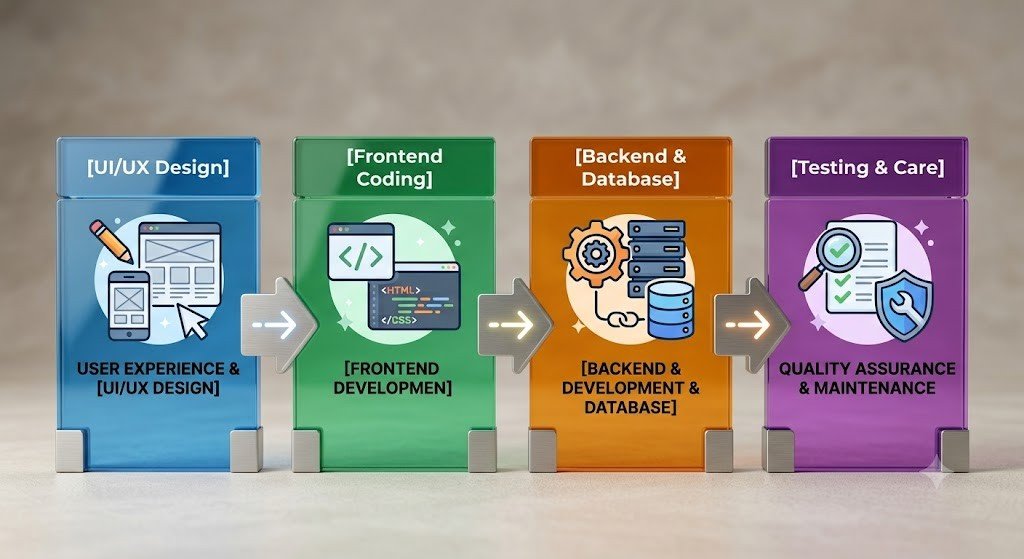
Not every agency handles the exact same tasks. When you talk to different teams, they usually cover these core areas:
1. Custom Web Applications
If you need complex software—like a client portal, an online marketplace, or a subscription platform—developers build the system from scratch using proven tools like React, Vue, Laravel, or Node.js.
2. E-Commerce Online Stores
If you sell products online, your checkout process must be simple and safe. Agencies set up stores using platforms like WooCommerce, Shopify, or custom setups. They connect your payment systems, set up shipping rates, manage stock counters, and configure taxes properly.
3. CMS Setup and Custom Layouts
A Content Management System (CMS) allows you to edit text, publish articles, and swap photos without needing a programmer every time. Most teams build on user-friendly platforms like WordPress, Webflow, or headless options like Strapi.
4. Ongoing Maintenance and Updates
Launching your site is only the first step. You still need regular security updates, server backups, speed checks, and quick fixes for broken elements to keep everything running without downtime.
Step-by-Step Guide: How to Pick the Right Team
Finding the right team takes a bit of patience. Walk through these simple steps before you sign a contract.
Step 1: Write Down What You Need
Before you start calling developers, make a quick list:
- What is the main goal of the site? (getting leads, selling products, or sharing info)
- Who are your target customers?
- What specific features do you need right away?
- What is your budget limit and your target launch date?
Step 2: Test Their Past Work on Your Phone
Never rely only on screenshots in a portfolio. Open their past client websites on your own phone and laptop. Click through the menus, test the buttons, see how fast the pages open, and check if the layout feels natural.
Step 3: Ask About the Tools They Plan to Use
Ask which programming languages and tools they recommend for your project. A reliable web development company will explain their technical choices in plain everyday words without confusing you with unnecessary jargon.
Step 4: Make Sure You Own the Code and Domain
Always confirm that your written agreement says you own everything once you pay:
- The full website code
- The domain name and hosting accounts
- All logos, graphics, and written content
Never work with an agency that keeps your login details or files locked under their own name.
Step 5: Ask About Support After the Launch
Find out what happens after the site goes live. If you find a bug in the first few weeks, who fixes it? How much do they charge for monthly checkups? A trustworthy company will include a clear warranty window for bug fixes.
Comparing Your Options: Freelancers vs. In-House Staff vs. Agencies
Depending on your budget, timeline, and project size, you have a few ways to get your website built:
| Factor | Freelance Developer | In-House Developer | Web Development Company |
| Overall Cost | Low to Moderate | High (Monthly Salary + Taxes) | Moderate to High (Fixed Project) |
| Skill Set | Usually 1 or 2 specific skills | Limited to the person you hire | Complete team (Design, Code, QA, SEO) |
| Management | You have to manage them daily | You manage their daily tasks | Dedicated Project Manager handles it |
| Reliability | Can get busy or disappear | Reliable while employed | Reliable with contractual guarantees |
| Best Used For | Small tasks and quick edits | Ongoing full-time internal work | Complete custom websites and web apps |
Common Mistakes to Avoid When Hiring
Hiring the wrong agency can cost you money and months of wasted effort. Watch out for these common traps:
Going for the Cheapest Option
Very cheap quotes usually end up costing more down the road. Low bids often mean the developer is using broken pre-made templates, ignoring security, or skipping mobile testing. Fixing messy code later usually costs more than doing it right from day one.
Working with Poor Communicators
Strong technical skills mean very little if a team takes three days to answer a basic question. Pay attention to how quickly and clearly they reply to your initial emails and calls.
Starting Without a Detailed Scope of Work
Do not start work on verbal promises. Make sure you have a written agreement that lists every single page, all required features, revision limits, and payment milestones. This keeps both sides on the exact same page.
Main Things That Change the Final Price:
- Custom Layouts vs. Themes: Creating unique page layouts from scratch takes more design and coding hours than adjusting a pre-made template.
- Third-Party Integrations: Connecting payment gateways, CRM software, shipping tools, or custom APIs adds technical work.
- Content and Copywriting: Writing original copy, designing custom graphics, and preparing product photos will add to the budget if you need the agency to do it.
- Testing on Real Devices: Running proper quality checks across dozens of phone screens and browsers takes dedicated time, but prevents broken pages after launch.
Simple Questions to Ask Before Signing a Contract
Set up a call and ask these direct questions before you make any payment:
- Have you built websites for companies in my industry before?
- Who will be my single point of contact while the site is being built?
- How do you test the site across different phones and screen sizes?
- Are you building a custom theme or just editing an existing template?
- What happens if the project runs past our agreed deadline?
- Do you provide a training video so our team can edit text and images later?
- How do you handle backups, security updates, and bug fixes after we launch?
Final Thoughts
Building a solid website is an investment in your company’s future. A good web development company acts as your long-term technology partner—saving you from costly technical headaches, keeping your customer data safe, and giving your visitors a smooth experience that helps you grow.
Take your time to look through real portfolio examples, confirm that you will own your code, and work with a team that communicates clearly from day one.
Frequently Asked Questions (FAQ)
1. How long does a web development company need to finish a website?
A standard business site with 5 to 10 pages usually takes between 4 and 8 weeks. Larger builds, like an online store or a custom web app, typically take anywhere from 3 to 6 months depending on how complex the features are and how quickly you provide feedback.
2. What is the difference between web design and web development?
Web design is all about how the site looks, including colors, layout, fonts, and user experience. Web development is about writing the code behind the scenes to make those designs work, setting up databases, and making sure forms, buttons, and links run without errors.
3. Can I easily edit my own website after it goes live?
Yes. Most development teams build websites using simple platforms like WordPress or Webflow. They will show you how to log in, swap out text, upload new photos, and publish blog posts on your own without touching any code.
4. Do I have to write all the content and take the photos myself?
You can supply your own words and photos if you already have them ready. If you do not, most full-service web development companies have in-house writers and designers who can create written content and source proper images for an extra fee.
5. What ongoing costs will I have after the website is live?
Your main recurring expenses will be your domain renewal (paid once a year), your web hosting plan (paid monthly or yearly), and an optional maintenance package if you want the development team to handle regular backups, plugin updates, and security monitoring.